


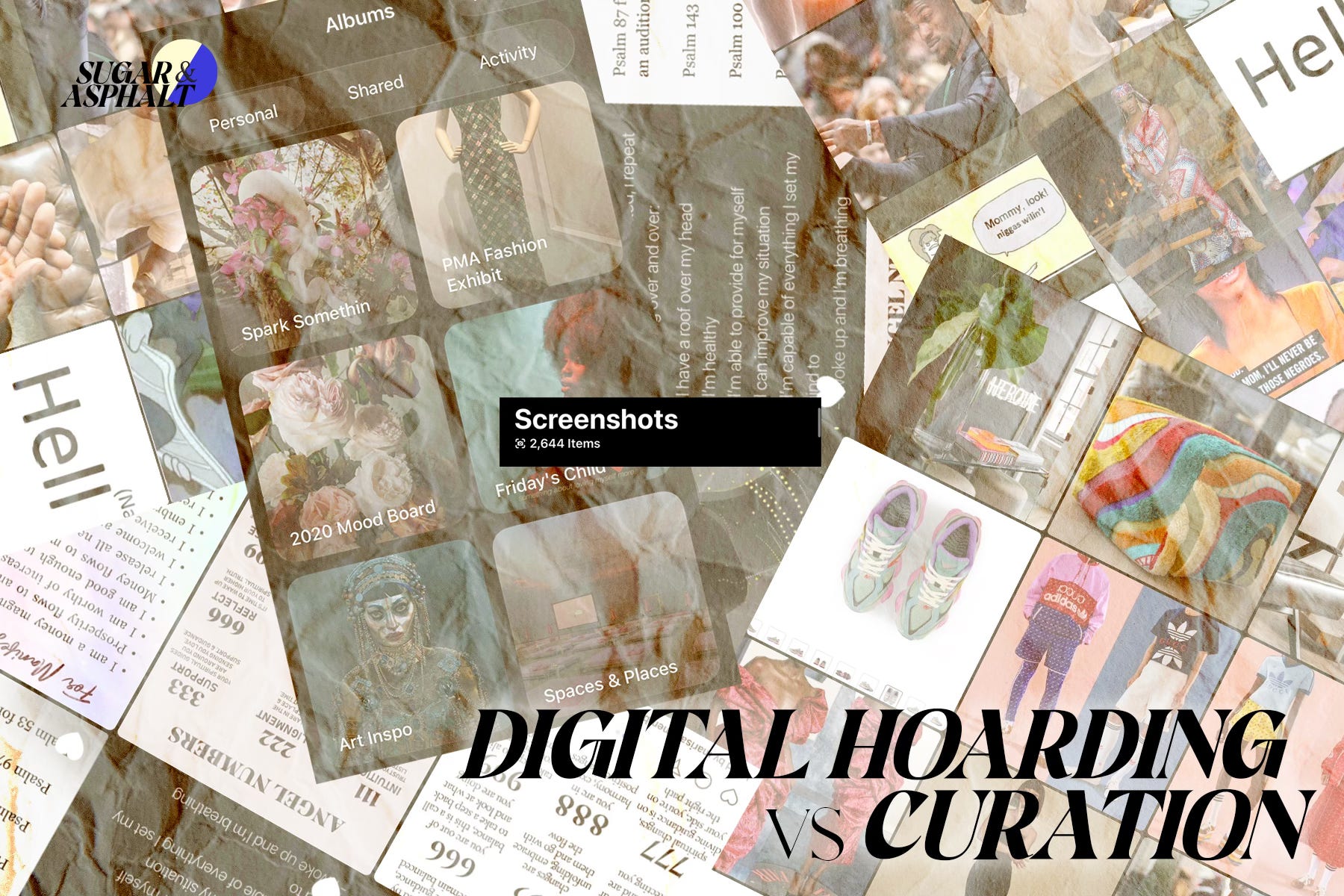
We all do it: come across a photo online—a funny meme, a breath-taking beach view that begs you to relax, a color palette that may feel inspiring in the moment. We instinctively take these digital snapshots and without much thought, save them to folders on our devices named “2026 Vision” or “Inspiration” for later use. The problem is later never comes. We continuously add and collect content as a “just in case”, without asking ourselves the motives behind our actions.
The internet made it easy to collect everything. It didn’t teach us what to do with any of it.


The Myth of the “Inspiration” Folder
It is so easy to come up with practical reasonings behind the action. The “I might need it laters” and “this could be useful…possibly…maybe…someday”, sound pretty plausible on the surface. Convincing ourselves that what we’re accumulating is “good reference material”, or that it’s for a future project becomes enticing after just a few times. And if “inspiration” were really the goal, why does it feel more like the local CubeSmart? Because we’re storing, not using. Maximum intake, zero output. A symbol of creative preparedness that does nothing more than create meaningless clutter.
The Gap Between Intention and Behavior
This made me wonder, why is saving so much easier than engaging? And if everything is important, does anything really stand out? It isn’t about preservation—it’s about avoiding the discomfort of decision making and letting go. We use digital hoarding as emotional insurance, and that keeps us tethered to pasts and possibilities that no longer serve us. It’s strange how a camera roll can become both archive and confession. Saving the recipe instead of cooking it. Or better yet, saving the workout routine instead of working out (hi, it me.) This is aspirational hoarding disguised as productivity—a way to feel prepared without ever engaging. We tell ourselves we just like having options, but underneath is a fear of making the wrong choice. It starts to feel like we’re saving for a version of ourselves we haven’t become. In reality, we just don’t trust ourselves or our tastes.
Digital hoarding is excessive, automatic and fear-driven. Curation is intentional, reflective—revisited.


The Case for Curation
Since digital spaces have an infinite capacity, there is no physical limit forcing us to choose. That naturally leads to a belief that we aren’t ready or that our ideas aren’t good on our own. We have to learn how to trust our own tastes without backup. That doesn’t mean stripping down to minimalism or over-perfecting an aesthetic. It means being deliberate on what stays and what actually reflects us authentically. Think about what nourishes us now rather than holding onto a vision of who we might become later. Inspiration isn’t a thing you store. It’s a thing you cultivate through thoughtfulness. When we don’t choose, we lose the ability to know what actually matters. When we learn to edit and delete, it becomes a direct act of self-definition.
And sometimes the first act of creation is deleting what was never ours to keep.
—TANISHA

Annually I look back, declutter and pretty much delete 90% of my screenshots. I suddenly realize the info isn’t that important to me. It’s like a hunger to just acquire content. Great insight in this essay, on something that I’m sure we all struggle with! I’m going to be more intentional too!